
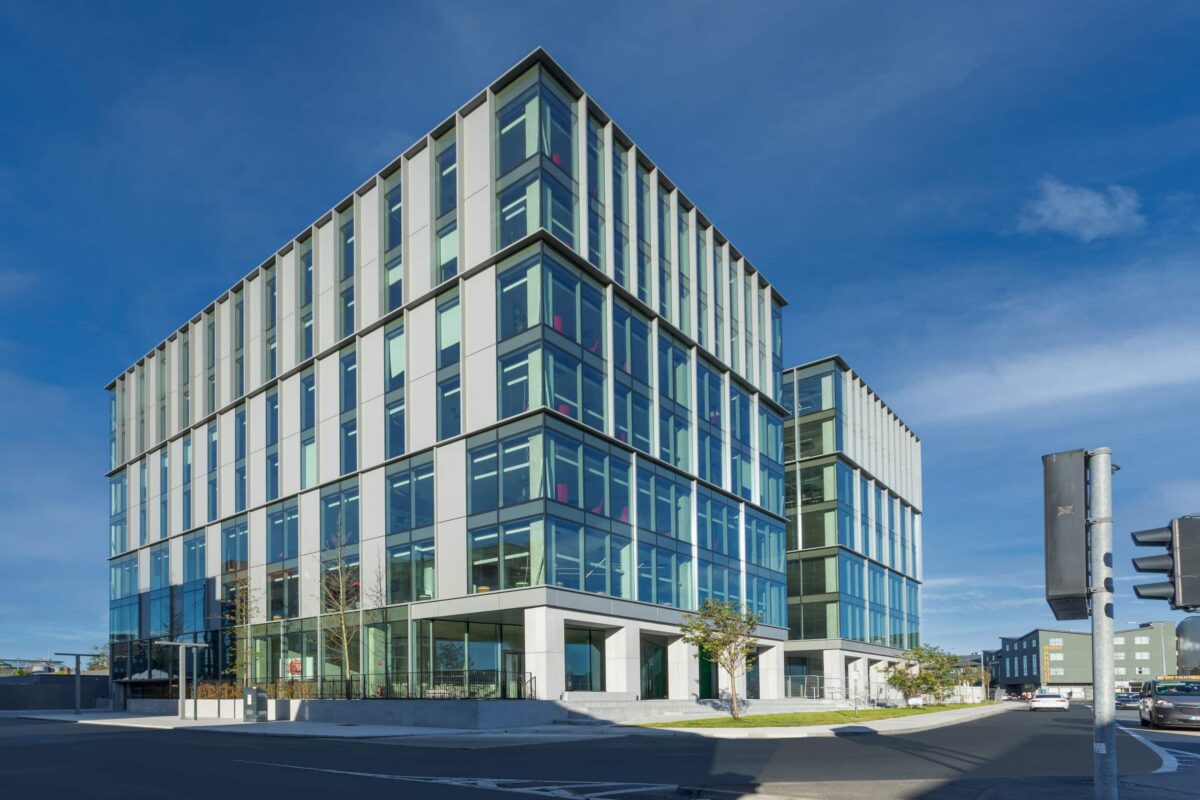
The best façade details rarely attract attention. They simply work.
What good detailing looks like
When junctions are resolved properly, the eye sees a coherent building rather than a series of technical compromises. Corners align. Openings feel deliberate. Interfaces with roofs, parapets, windows and ground levels appear calm because the complexity has already been dealt with behind the surface.
That apparent simplicity is usually the result of early coordination. Panel sizes, joint positions, cavity depths, tolerances, support zones, movement, ventilation, drainage and fire-stopping all need to be considered together — a small decision in one area can affect several others.
What poor detailing looks like later
Poor detailing often announces itself later through awkward cuts, inconsistent joints, visible packing, unplanned trims, staining, restricted drainage or maintenance problems. By then, the available solutions are usually more expensive and less elegant.
Good detailing is therefore not decorative refinement. It is risk management expressed through design.
Questions worth asking early
✅ Where do grids begin and end?
✅ What happens at every change in plane?
✅ Are tolerances realistic?
✅ Can water drain and the cavity ventilate?
✅ Can the system be installed in the sequence shown?
✅ Are interfaces owned by someone?
The goal is not to make technical complexity visible. It is to resolve it so completely that the finished façade feels inevitable.
Bringing us in during concept or developed design lets us test these questions while there's still room to adjust. Get in touch or see how our subframe solutions are designed to make this coordination easier.

No Comments.